
*By Kristian Dane Lawing, Emmy-Nominated Cinematographer & Adjunct Instructor, Georgia Film Academy*
—–
Savannah is showing the signs that it is reigniting the engine of its remarkable transformation into a viable film and video production landscape. What was once primarily a location for visiting productions is again evolving into a genuine production hub with local talent, growing infrastructure, and increasingly sophisticated clients demanding professional-grade content. Yet this growth brings a critical challenge: the gap between enthusiasm and expertise. Especially as many experienced filmmakers left the region after the last downturn.
This past fall, I had the privilege of teaching motion picture lighting and electricity at the Georgia Film Academy, operating out of Savannah State University. Working with students eager to enter the industry reinforced something I’ve observed throughout three decades in production: technical knowledge and creative vision aren’t the same thing, and both require years to develop. The Southeast’s production boom has meant more opportunities than ever—but also more clients making their first significant investment in video content, often without the experience to distinguish between competent execution and genuine expertise.
The Savannah Production Landscape Today
Drive through Savannah’s historic waterfront or out to the islands, and you’ll see what appears to be the return of production trucks, active sets, and crews at work. Local businesses are starting to recognize that video content is no longer optional— that it’s essential for competitive marketing, recruitment, training, and brand building. Corporate clients from Atlanta and beyond are rediscovering Savannah as a production-friendly location with visual diversity few coastal cities can match.
Simultaneously, documentary filmmakers are drawn to the region’s rich history and complex stories, from Gullah-Geechee culture to environmental challenges facing coastal Georgia. Commercial productions appreciate the Spanish moss aesthetic and architectural variety. And the infrastructure appears to be on the road to improving—the establishment and growth of equipment rental houses, the return of experienced crew members, and institutions like SCAD and my own Georgia Film Academy developing local talent.
This growth is unquestionably positive. But it creates a paradox: as demand increases and more production companies emerge to meet it, clients face greater difficulty identifying partners with the depth of experience their projects actually require.
What “Experience” Actually Means in Production
When clients evaluate production partners, they often focus on equipment lists, demo reels, and pricing. Of course these matter, but the real differentiator—the factor that separates adequate execution from exceptional results—is derived from years of experience solving the problems that inevitably emerge under production pressure.
Teaching lighting and electricity at the Georgia Film Academy meant introducing students to the technical fundamentals: color theory, DMX, lighting and rigging instruments, power distribution, safety protocols, and much more. These are essential building blocks. But what I couldn’t fully convey in a semester—what only years of production experience provides—is the instinctive problem-solving that defines professional cinematography and production in general.
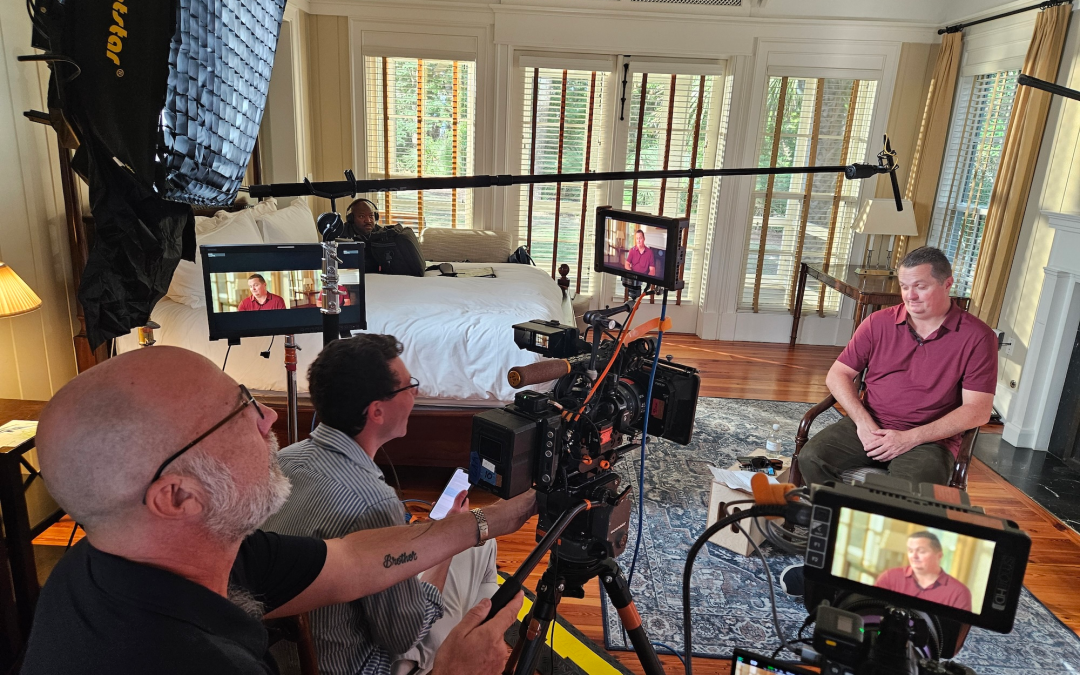
Consider a seemingly simple corporate interview. A less experienced crew sees a conference room and sets up conventional interview lighting. An experienced cinematographer sees the same space and immediately notices: the windows will create color temperature and lighting issues when the sun shifts; the HVAC system’s hum will interfere with audio; the reflective table surface will be an issue; the background needs depth separation to avoid looking flat on camera.
None of these problems are insurmountable—if you’ve encountered them before. If you haven’t, each becomes a crisis discovered too late, often in post production, resulting in disappointing footage or even blown budgets from extending production days and reshoots.
The Hidden Costs of Inexperience
Savannah’s production community includes talented newcomers bringing fresh perspectives and what seems like competitive pricing at first glance. Some of them will develop into excellent professionals over time. But clients selecting production partners based primarily on cost often discover that inexperience carries hidden expenses far exceeding any initial savings.
I’ve been hired to salvage projects that began with less experienced crews. Common patterns emerge: inadequate pre-production planning; poor lighting choices requiring expensive correction in post-production; audio issues discovered too late to completely fix; projects that drag beyond scheduled timelines because problems weren’t anticipated; and perhaps most costly, creative approaches that fail to serve the client’s actual objectives.
These aren’t failures of effort or intention. They’re the natural result of learning curves. The question for clients is whether they want their project to be someone else’s education or the beneficiary of hard-won expertise.
What Experienced Professionals Bring to Regional Production
After 28 years as a director of photography—including an Oscar-shortlisted documentary filmed during the Iraq War, Emmy nominations for both national series and commercials, and many years traveling internationally as a cinematographer for National Geographic, Discovery, Travel, HBO and many others — I’ve learned that every seemingly novel production challenge is one that has been solved before. The value isn’t just in having technical knowledge; it’s in pattern recognition.
When MediaTwins approaches a corporate video for a regional manufacturer or a documentary for a major studio, we’re applying lessons from literally hundreds of previous productions across six continents. We know how to light a CEO interview so it conveys authority without coldness. We understand how to film industrial environments safely while making manufacturing processes visually compelling. We’ve navigated the complications of multi-location shoots, tight deadlines, sensitive subjects, and the thousand small decisions that collectively determine whether a project succeeds or merely gets completed.
This experience means we ask the right questions during pre-production, anticipate problems before they emerge, and solve unexpected challenges without panic or budget overruns. It means we can look at a client’s goals and production constraints and immediately outline not just what’s possible, but what approach will deliver the best results within those parameters.
The Mentorship Imperative
Teaching at the Georgia Film Academy reinforced my belief that Savannah’s production community benefits when experienced professionals actively engage with emerging talent. The industry needs fresh perspectives and new voices. But it also needs mentorship—experienced practitioners willing to share knowledge rather than simply competing on price.
This is partly why MediaTwins maintains equipment rental services alongside our production work. When a newer production company or independent filmmaker rents lighting packages from us, we’re happy to discuss technical approaches, offer suggestions, or troubleshoot challenges. The Southeast’s production growth benefits everyone when quality standards rise collectively.
Similarly, our willingness to collaborate with existing teams—serving as director of photography for another company’s production, providing consulting on lighting design, or handling specific technical aspects of larger projects—reflects the understanding that expertise should be freely shared.
What Clients Should Look For
For businesses, nonprofits, and institutions investing in video production, particularly those creating content for the first time or stepping up from basic execution to professional-grade work, several factors should guide partner selection:
**Verifiable credentials matter.** Our Emmy nominations, Society of Camera Operators membership, broadcast network credits—these aren’t just résumé decoration. They represent work that met the industry’s highest technical and creative standards, evaluated by peers with decades of experience. A production partner with these credentials brings proven capability, not just claimed expertise.
**Ask about problem-solving experience.** Request examples of productions where unexpected challenges emerged and how they were resolved. Experienced professionals will have numerous stories because problems are inevitable—the differentiator is handling them professionally.
**Understand the difference between equipment and expertise.** Modern cameras are remarkably capable, and quality equipment is more accessible than ever. But a cinema camera doesn’t create cinematic images any more than AI creates compelling writing. The difference lies in the experience behind the equipment.
**Consider the full production scope.** The cheapest bid often reflects inexperience with actual production requirements. Experienced professionals provide detailed proposals that account for pre-production planning, adequate crew, contingency time, proper insurance, and realistic post-production timelines. If a bid seems surprisingly low, it probably reflects underestimated complexity.
**Value communication and collaboration.** Great production partnerships involve ongoing dialogue, creative collaboration, and mutual respect. The most technically accomplished cinematographer won’t serve a client well if they can’t translate creative vision into practical execution or communicate clearly throughout the process.
The Long View
I am certain that Savannah’s production growth will continue. The Georgia Film Academy, SCAD, Savannah Film Academy and similar programs will continue to develop new talent. Technology will continue to become ever more accessible. Competition will increase. And all of this is welcome as it benefits the region’s creative economy.
But fundamental realities of production won’t change. Great cinematography still requires mastery of light, composition, and storytelling. Professional production still demands logistical expertise, problem-solving ability, and creative vision refined over years of experience. Clients investing in video content—whether a corporate brand video, a documentary project, or a commercial campaign—still need partners who bring not just equipment and enthusiasm, but proven capability developed across hundreds of previous productions.
MediaTwins relocated from Los Angeles to Savannah because we recognized the Southeast’s production potential and wanted to bring Hollywood-caliber expertise to a market experiencing tremendous growth. Teaching at the Georgia Film Academy allows me to contribute to developing the next generation of production professionals. But it also reinforces my understanding of what experience provides that enthusiasm alone cannot: the accumulated wisdom of decades spent solving every conceivable production challenge, the creative confidence that comes from proven success at the highest levels, and the technical mastery that transforms competent execution into genuinely exceptional results.
Savannah’s growing film industry requires experienced production partners who elevate regional work to compete with content created anywhere in the world. That’s the standard MediaTwins brings to every project, regardless of scale or budget. And that’s what clients should demand from anyone asking for their trust and investment.